Fishing in Florida at a glance
Florida gives you three very different fisheries within a couple of hours’ drive. Inland, natural lakes and slow rivers hold Florida-strain largemouth bass, crappie (locals say “specks”) and bluegill. Along the Gulf and the Atlantic, grass flats, mangroves, bridges and inlets hold snook, redfish, spotted seatrout and tarpon. Offshore is its own world, with federal rules on top of the state ones.
Because the water stays warm, there is no real off-season. Bass spawn earlier than in the North, often from late winter into spring, and the cooler months are prime time for many anglers.
Licenses
Florida sells separate freshwater and saltwater licenses, both issued by the Florida Fish and Wildlife Conservation Commission (FWC). Florida residents 65 and older are exempt with proof of age and residency, and residents who fish from shore in saltwater can get the free shoreline license instead of the full saltwater one. Some species need an extra permit on top of the license: snook is the best known. Buy and check licenses on the FWC site linked in the box on this page.
Where to fish
The access data below comes from FWC and federal sources. Florida’s list is dominated by boat ramps, with more than 280 public piers and docks for anglers without a boat. The rivers with the most public access are the Suwannee, the St. Johns and the Peace. On the coast, the Indian River Lagoon, Biscayne Bay, Tampa Bay and Sarasota Bay stand out.
Start with Lake Okeechobee if you want a classic Florida bass trip. For saltwater, look up the snook season before you go: our snook season guide has the open dates for each coast.
Florida lake guides
- lakeHarris Chain of LakesA chain of connected lakes in Lake County
- lakeLake IstokpogaA big
- lakeLake OkeechobeeFlorida's inland sea
- reservoirLake SeminoleA grassy
- reservoirLake TalquinA stump-filled reservoir on the Ochlockonee River west of Tallahassee
- lakeLake TohopekaligaLake Toho
Waters with the most public access
Counted from the 2,472 public boat ramps, piers and shore access points we list in Florida.
| Water | Access points | Guide |
|---|---|---|
| Suwannee River | 66 | — |
| Indian River Lagoon | 60 | — |
| St. Johns River | 52 | — |
| Peace River | 25 | — |
| Biscayne Bay | 23 | — |
| Withlacoochee River (West Central Florida) | 21 | — |
| Caloosahatchee River | 20 | — |
| Apalachicola River | 19 | — |
| Indian River | 18 | — |
| New River (Carrabelle) | 18 | — |
| Chipola River | 17 | — |
| Choctawhatchee River | 17 | — |
| Halifax River | 17 | — |
| Middle Aucilla River | 16 | — |
| Tampa Bay - Boca Ciega Bay | 16 | — |
| Atlantic Ocean | 15 | — |
| Blackwater River | 15 | — |
| Sarasota Bay | 15 | — |
| Choctawhatchee Bay | 14 | — |
| Escambia River | 14 | — |
| Lake Okeechobee | 14 | Lake Okeechobee guide |
| Ochlockonee River | 14 | — |
| Ochlockonee River - Lake Talquin | 14 | Lake Talquin guide |
| Tampa Bay | 14 | — |
| Gulf of Mexico | 13 | — |
| Santa Rosa Sound | 13 | — |
| Yellow River | 13 | — |
| Atlantic ICW (Volusia County) Halifax River | 12 | — |
| Gulf Of America | 12 | — |
| Holmes Creek | 12 | — |
Fish to target
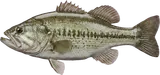
Largemouth bass
Lakes, ponds and reservoirs: weed beds, lily pads, flooded timber, docks and reed edges.
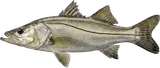
Common snook
Mangroves, inlets, beaches, lighted docks and coastal rivers of South and Central Florida.
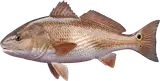
Red drum (redfish)
Shallow flats, grass beds, marsh edges, oyster bars, inlets and surf beaches.
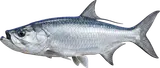
Tarpon
Inlets, bridges, beaches, flats and river mouths during the late spring and summer migrations.
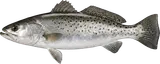
Spotted seatrout (speckled trout)
Grass flats, channel edges, marshes, oyster bars and deep estuary holes in winter.
Florida fishing rules at a glance
| Species | Season | Size | Daily bag |
|---|---|---|---|
| Largemouth bass freshwater | Open year-round | No statewide size limit | 5 |
| Crappie freshwater | Open year-round | No statewide size limit | 25 |
| Bluegill / sunfish freshwater | Open year-round | No statewide size limit | 50 |
| Red drum (redfish) saltwater | Open year-round | 18–27 in slot | 1 |
| Spotted seatrout (speckled trout) saltwater | Open year-round | 15–19 in slot | 3 |
| Southern flounder both | Dec 1 to Oct 14 | 14 in min | 5 |
| Sheepshead saltwater | Open year-round | 12 in min | 8 |
| Black drum saltwater | Open year-round | 14–24 in slot | 5 |
| Common snook both | Mar 1 to Apr 30; Oct 1 to Nov 30 | 28–32 in slot | 1 |
| Tarpon both | Year-round, catch and release only | No statewide size limit | None, release all |